Is a thermal monocular worth it? Who should buy one
Who gets their money's worth, who does not, and what $410, $1,200 or $3,300 really buys you this season.
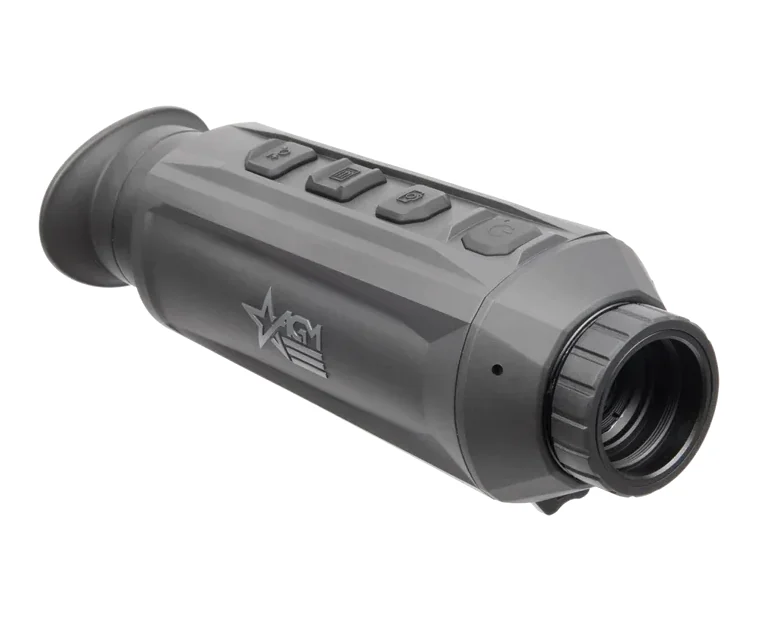
AGM Taipan V2 19-3848.8/10Read the review
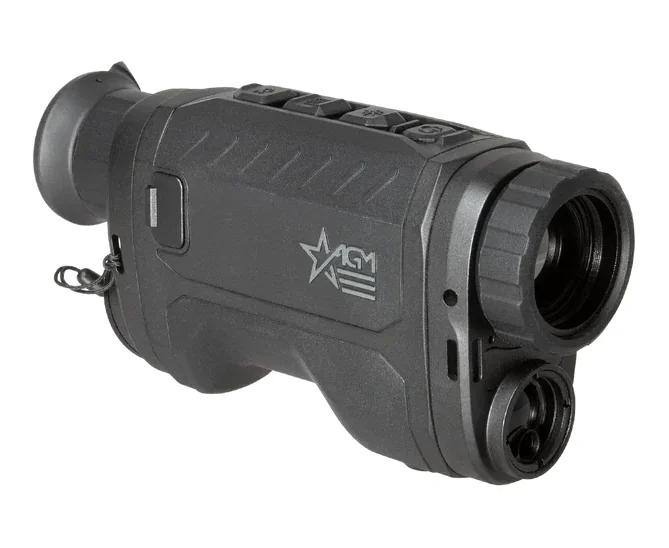
Short answer: a thermal monocular is worth it if you need to find warm animals or people in the dark: hunters after hogs and coyotes, farmers watching livestock, landowners checking a property line, hunters recovering game. It is not worth it if you mostly need to see details or move around at night. Prices start at $409.99 (TOPDON TS004 on sale), most buyers are happiest around $800 to $1,200, and the AGM Taipan V2 19-384 ($1,195) is the one we would recommend to most people.
Who gets their money's worth
- Hog and coyote hunters. This is where thermal changes the game: you see every warm body in the field at night. Our coyote and hog guide has the picks.
- Deer hunters who want to recover game. A warm deer shows up in brush where the eye misses it. See our deer recovery guide.
- Farmers and ranchers. Count cattle in a dark pasture, check a calving pen, find what is bothering the chickens, without lighting up the whole yard.
- Landowners and rural homeowners. Walk the property line, see whether that noise by the barn is a raccoon or a person, check on the dog at the back fence.
- Wildlife watchers. Owls, foxes, deer and raccoons are far more active at night than most people imagine. Thermal lets you watch without disturbing them with light.
What all these people share is a need to find something warm in the dark. If that is you, a thermal monocular will likely be one of the tools you use most.
When it is not worth it
- You need detail more than detection. Thermal shows shapes and outlines. Reading a license plate, a face or the ground under your feet is not its job; night vision or a good light does that better.
- You want to look through windows. Ordinary glass blocks long-wave infrared: you will see your own reflection. Our guide on what thermal can see through explains why.
- You will use it twice a year. A thermal monocular is an electronic device with a battery. If it lives in a drawer, the money is better spent elsewhere.
- You plan to travel abroad with it. Thermal imagers can be subject to US export controls, and several brands print export notices on their pages.
What the money buys in 2026
Here is what each price step gets you, with the US prices we checked on the official stores on November 9, 2026. The jump from one tier to the next is real: it buys sensor resolution, lens length (reach) and, at the top, a laser rangefinder.
| Budget | What you get | Examples |
|---|---|---|
| $410 to $550 | 256×192 sensor, 10 to 13 mm lens: yards, barns, woodlots | TOPDON TS004 ($409.99 on sale), AGM Taipan V2 10-256 ($544.50) |
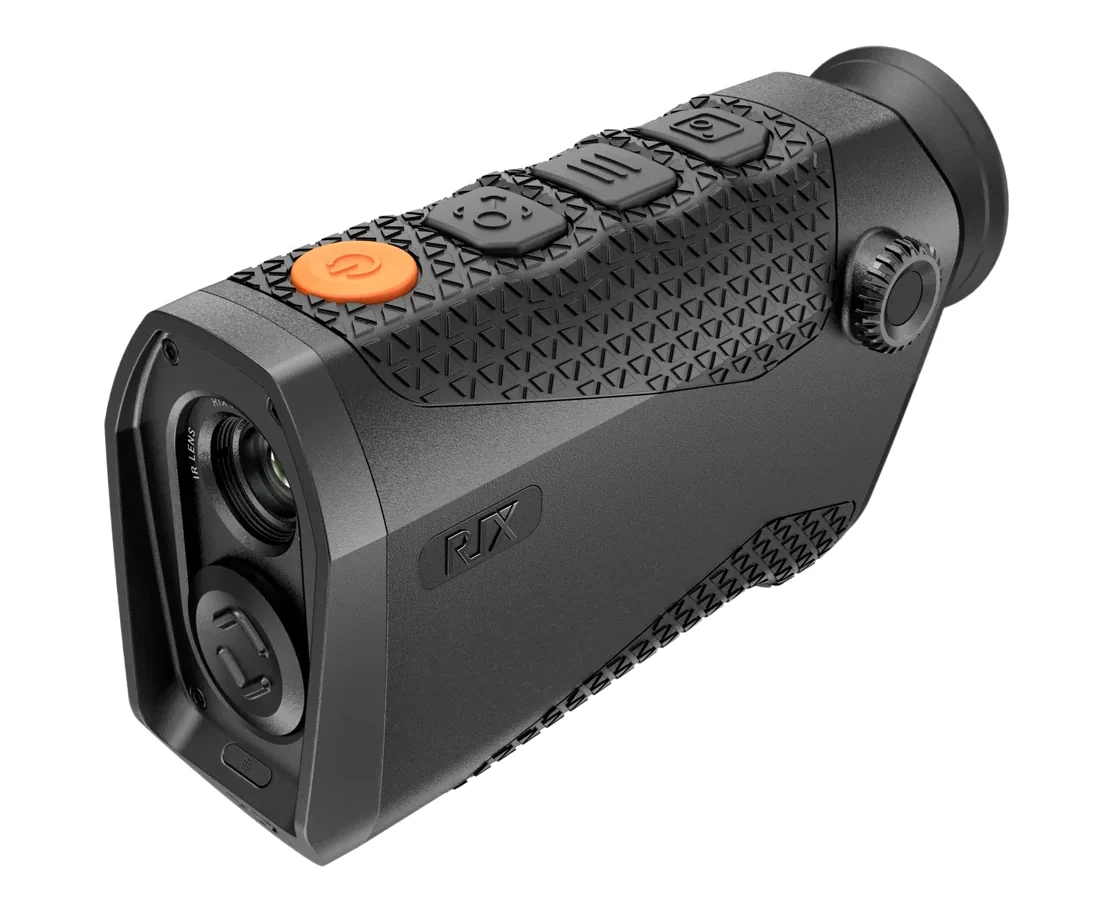
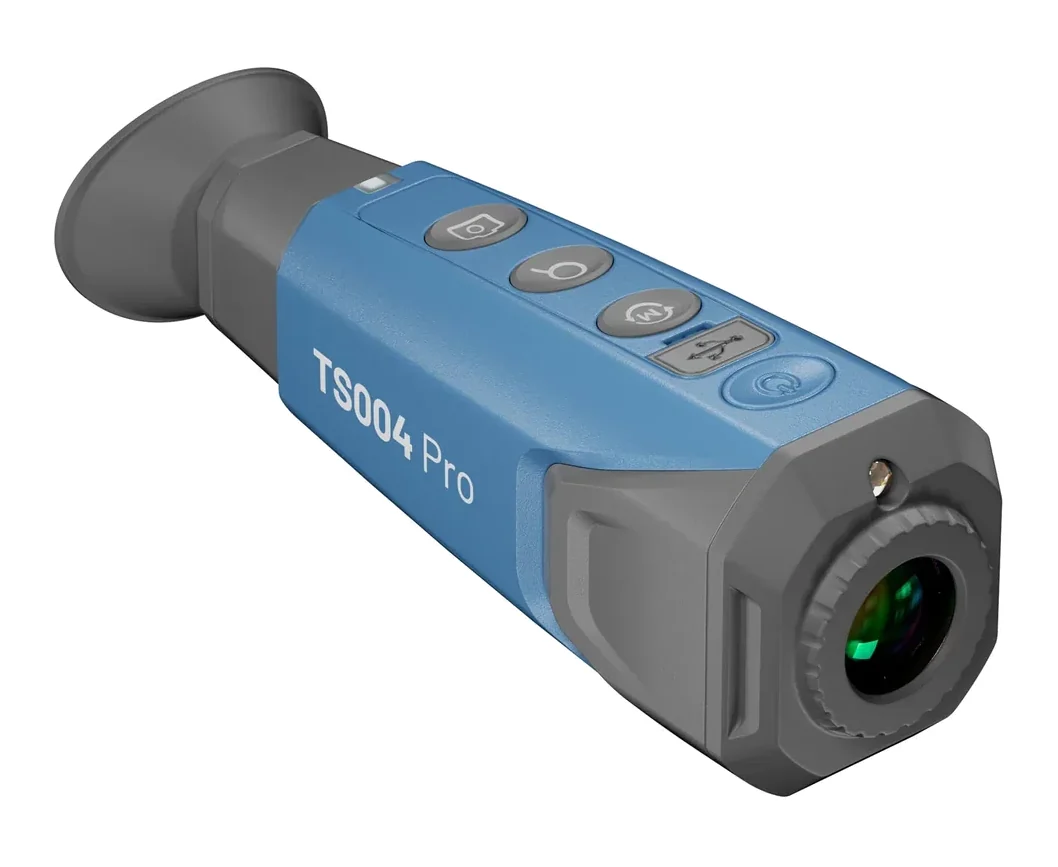
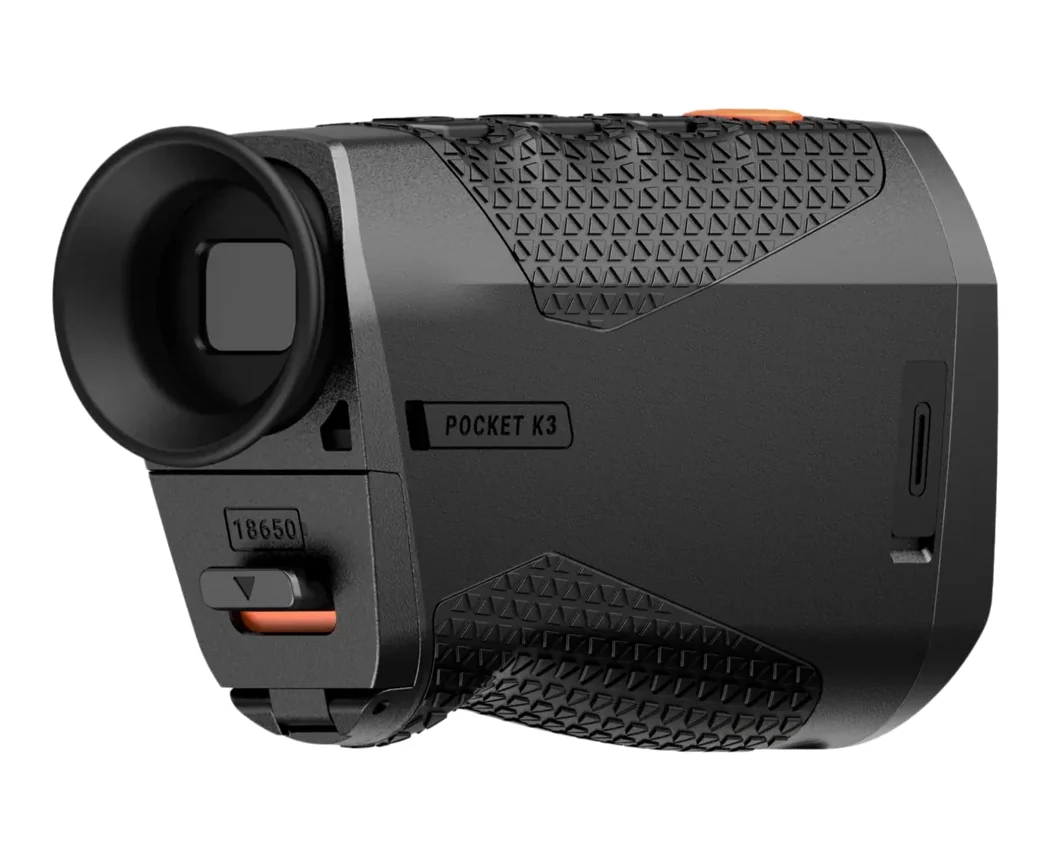
| $800 to $1,200 | 384×288 sensor, 15 to 19 mm lens: most hunting and farm use | RIX Pocket K3 ($799 on sale), TOPDON TS004 Pro ($899), AGM Taipan V2 19-384 ($1,195) |
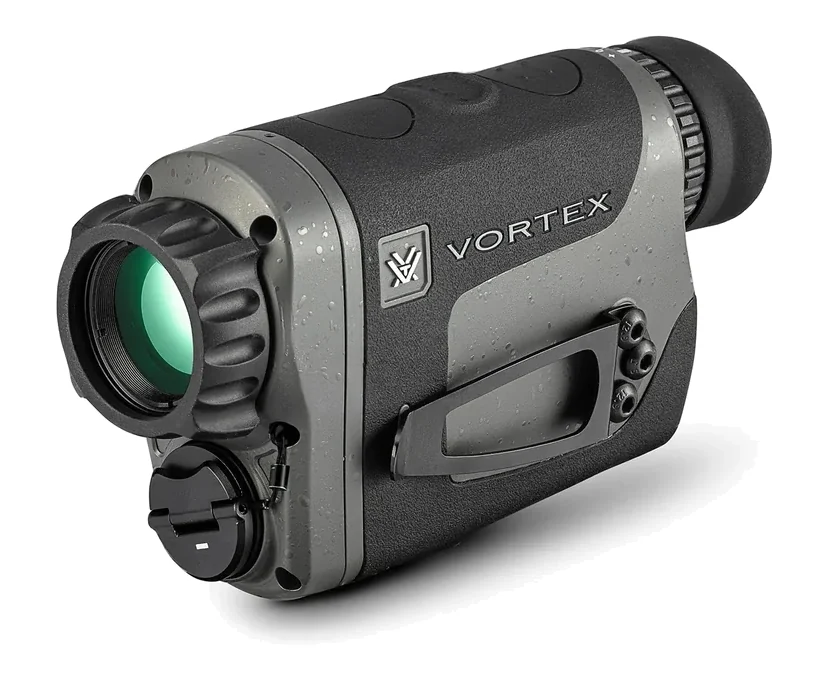
| $1,500 to $2,300 | Longer lenses, a first laser rangefinder | AGM ReachIR LRF 25-384 ($1,895), Vortex Veil 400 ($2,299.99 MSRP) |
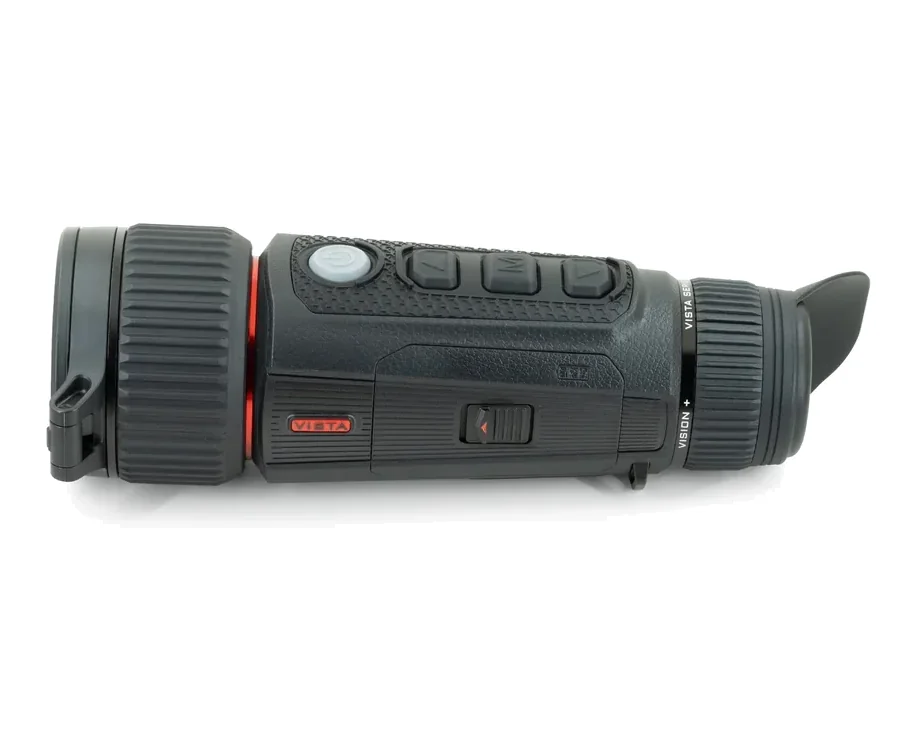
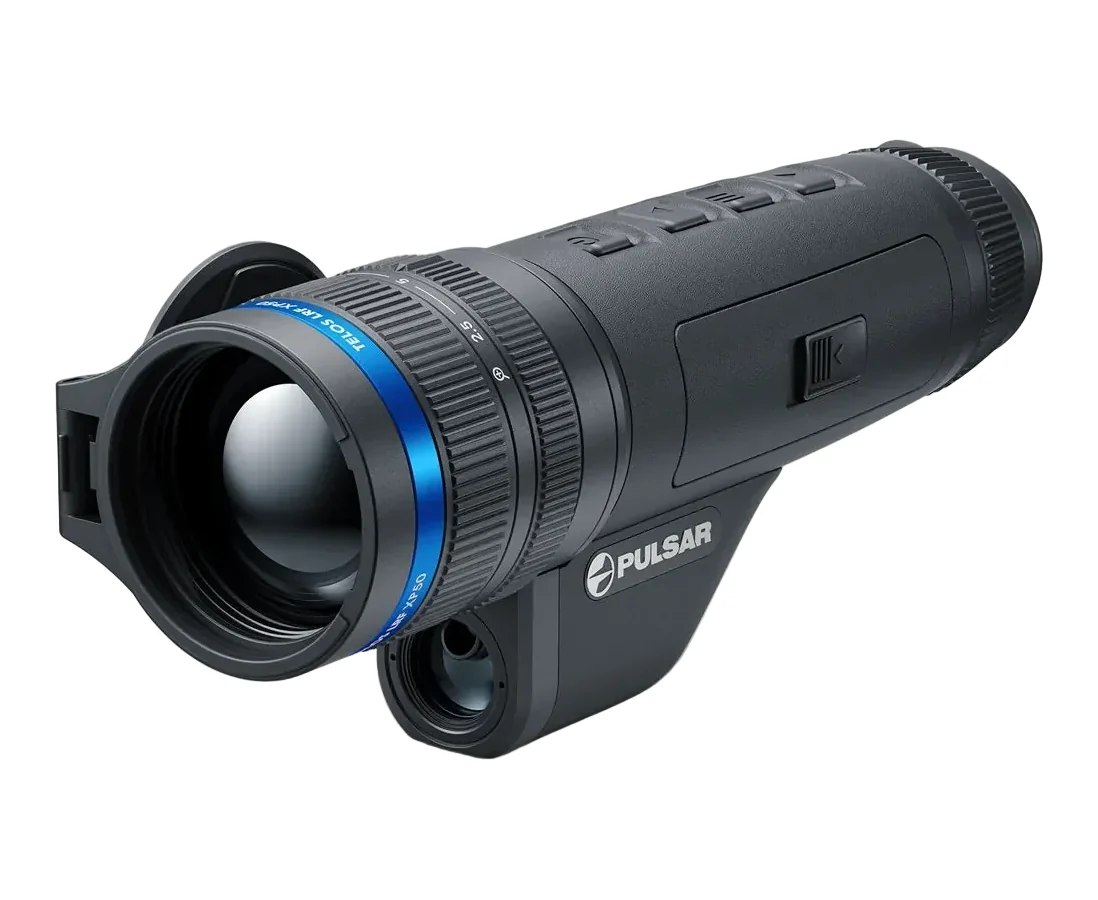
| $2,500 and up | 640 sensors, 35 to 50 mm lenses, lasers | Nocpix Vista H35R ($3,300), Pulsar Telos LRF XP50 ($3,699.97) |
For most people, the middle tier is where the value is. A 384 sensor shows 2.25 times the pixels of a 256 one, and the difference is obvious on the screen the first night. Our main ranking scores all 14 models with the same published formula.
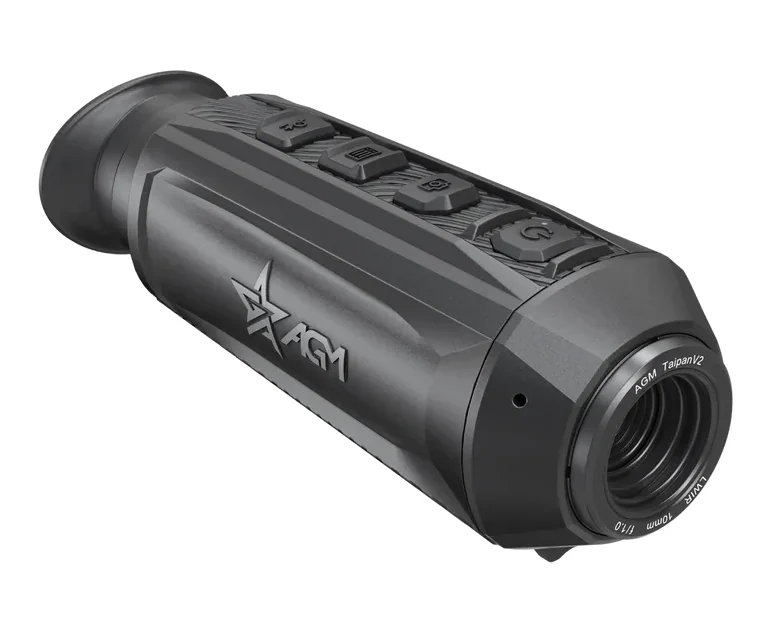 Thermal monocularAGM Taipan V2 10-256
Thermal monocular vs a flashlight or night vision
A good flashlight is cheap and shows you everything in its beam, but it also tells every animal exactly where you are, and it shows nothing behind the first layer of brush. Night vision shows a natural picture and is great for moving around, but it needs some light or an infrared illuminator.
Thermal is the only one of the three that finds a warm animal in total darkness at a few hundred yards without giving you away. That is why so many people who buy one say they should have bought it sooner, and why it is often the first night optic a hunter buys. Our thermal vs night vision guide compares them line by line.
The cost of owning one
The price tag is not the whole story. Three things decide how much a thermal monocular really costs you over the years:
- Warranty. From 1 year (TOPDON) to 3 years (Pulsar, ATN, Burris; Pulsar adds 2 years when you register a US purchase), 5 years (AGM, RIX, Nocpix) and lifetime (Vortex). On a device used in rain and frost, that gap is money.
- Battery design. A swappable 18650 cell or pack (AGM, RIX, Vortex, Burris, Pulsar, Nocpix) can be replaced or doubled with a spare. A built-in battery (TOPDON, ATN) is simpler, but a power bank becomes your spare.
- Weather sealing. Eleven of the 14 models carry an IP67 or IPX7 rating. If you hunt in rain or snow, keep to those.
How to buy without regret
- Write down what you will use it for and the longest distance that matters to you.
- Choose a 384×288 sensor if your budget reaches about $800; go 256×192 only for short-range jobs.
- Pick the lens: wide (15 mm or less) for woods and yards, 19 to 25 mm for mixed ground, 35 mm and up for open country.
- Prefer a 3 to 5-year warranty and a swappable battery.
- Check stock and the return policy on the official store before you order.
Our step-by-step buying guide goes deeper, and the comparison tool lines up any three models side by side.
Figures from official manufacturer pages and US prices checked on November 9, 2026. Images: manufacturers. How we score: see our methodology.
Our selection
Three rated monoculars mentioned in this guide, at checked prices.
Frequently asked questions
Is a thermal monocular worth the money?
Yes, if you need to find warm animals or people in the dark: hunting, farm and property checks, game recovery, wildlife watching. For most buyers, a 384 sensor around $800 to $1,200 gives the best value, like the AGM Taipan V2 19-384 at $1,195.
How much should I spend on a thermal monocular?
Around $800 to $1,200 for most people: that buys a 384×288 sensor. Under $550 you get 256×192 sensors for short range; above $1,800 you add lasers and longer lenses.
Are cheap thermal monoculars any good?
The cheapest model we compare, the TOPDON TS004 at $409.99 on sale, scores 8.5/10 and has an 11-hour battery. Its 256×192 sensor and 13 mm lens make it a short-range tool for yards, barns and livestock.
Who makes the best thermal monocular?
In our ranking of 14 models, the Nocpix Vista H35R is first at 9.0/10, followed by two Pulsar models. AGM and RIX lead on value. See the main ranking.
Do thermal monoculars work in the daytime?
Yes. They work day and night, and a warm animal in shade often stands out at noon. Never point one at the sun.
Should I wait for a sale?
Two models in our list were on sale when we checked on November 9, 2026: the TOPDON TS004 ($409.99, list $499.99) and the RIX Pocket K3 ($799, list $899). If one of them fits your use, a sale is a good moment; otherwise, buy the right lens and sensor rather than the biggest discount.