Can thermal see through walls, glass, fog or brush?
Walls, glass, water, fog, smoke and brush: what a thermal monocular sees through, partly sees through, and never will.
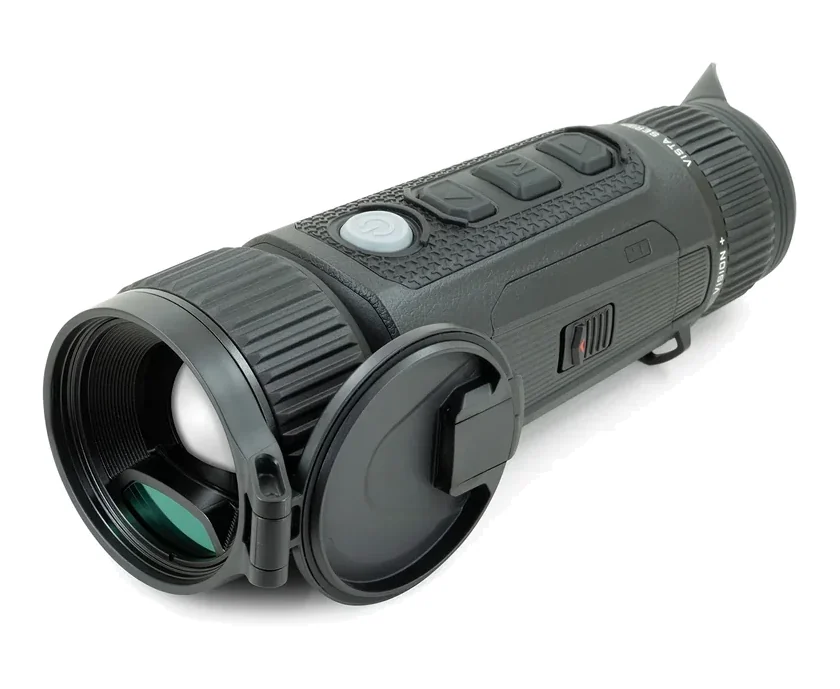
Nocpix Vista H35R9.0/10Read the review
Short answer: no to walls, no to ordinary glass and no to water. Partly to fog, haze and smoke, and to thin brush or tall grass through the gaps. A thermal monocular reads the surface temperature of whatever is in front of it, so anything solid between you and the animal hides it, and glass acts like a mirror.
Why thermal behaves this way
Thermal monoculars work in the long-wave infrared band, roughly 8 to 14 µm (Burris lists 8 to 14 µm, TOPDON 7.5 to 14 µm for the TS004 Pro). Warm bodies give off energy there, and the sensor measures it. But that energy travels in straight lines like light: anything that absorbs or reflects it stops the picture, and the sensor only sees the first surface in its way.
So the right question is not "can thermal see through X?" but "does X let long-wave infrared through?". Air mostly does. Water, glass, wood, brick, metal and leaves mostly do not.
| Obstacle | Can thermal see through? | What you actually see |
|---|---|---|
| Walls (wood, drywall, brick) | No | Surface temperature patterns on the wall |
| Window and windshield glass | No | The glass, reflections of warm objects (you) |
| Water | No | The surface; animals only where they break it |
| Light fog, haze, mist | Partly, often better than the eye | A softer, lower-contrast picture |
| Dense fog, heavy rain | Very little | Range drops sharply |
| Smoke | Partly | Depends on density; fire crews use thermal for this |
| Thin brush, tall grass | Through the gaps | Broken outlines of warm shapes |
| Thick foliage, tree trunks | No | Nothing behind them |
| Clothing, tarps | No, but heat soaks through | Warm patches where the cloth touches skin |
Walls: only the surface
A thermal imager pointed at a house shows which parts of the wall are warmer or colder: heat leaking around a window frame, a hot water pipe in the wall, a sun-warmed side at dusk. That is why home inspectors use thermal cameras. It does not show a person standing behind the wall: the wall absorbs their heat long before it reaches the outside surface.
Thin, uninsulated sheet metal can show a heat source pressed directly against it after a while. That is heat conducting through the material, not seeing through it.
Glass: the surprise for new owners
The first thing many new owners try is scanning the yard from the kitchen window, and they see a dark pane with their own warm silhouette. Ordinary window glass and car windshields are opaque to long-wave infrared and reflect it. Pulsar describes its germanium lenses as having "high infrared transmission in the LWIR range"; regular optical glass would block the image.
Fog, haze, smoke and rain
Long-wave infrared goes through light haze and thin mist better than visible light, so on a hazy evening a thermal often shows an animal you cannot see with your eyes or binoculars. As fog thickens, the water droplets absorb more and more of the signal, contrast falls, and range drops. Heavy rain does the same, and wet ground and wet fur cool down, which flattens the picture further.
Smoke depends on what is burning and how dense it is; fire departments rely on thermal imagers precisely because they see through much of it. For hunters, the practical point is simpler: on a foggy morning a thermal still beats your eyes at short range, but do not count on the distances you get on a clear night.
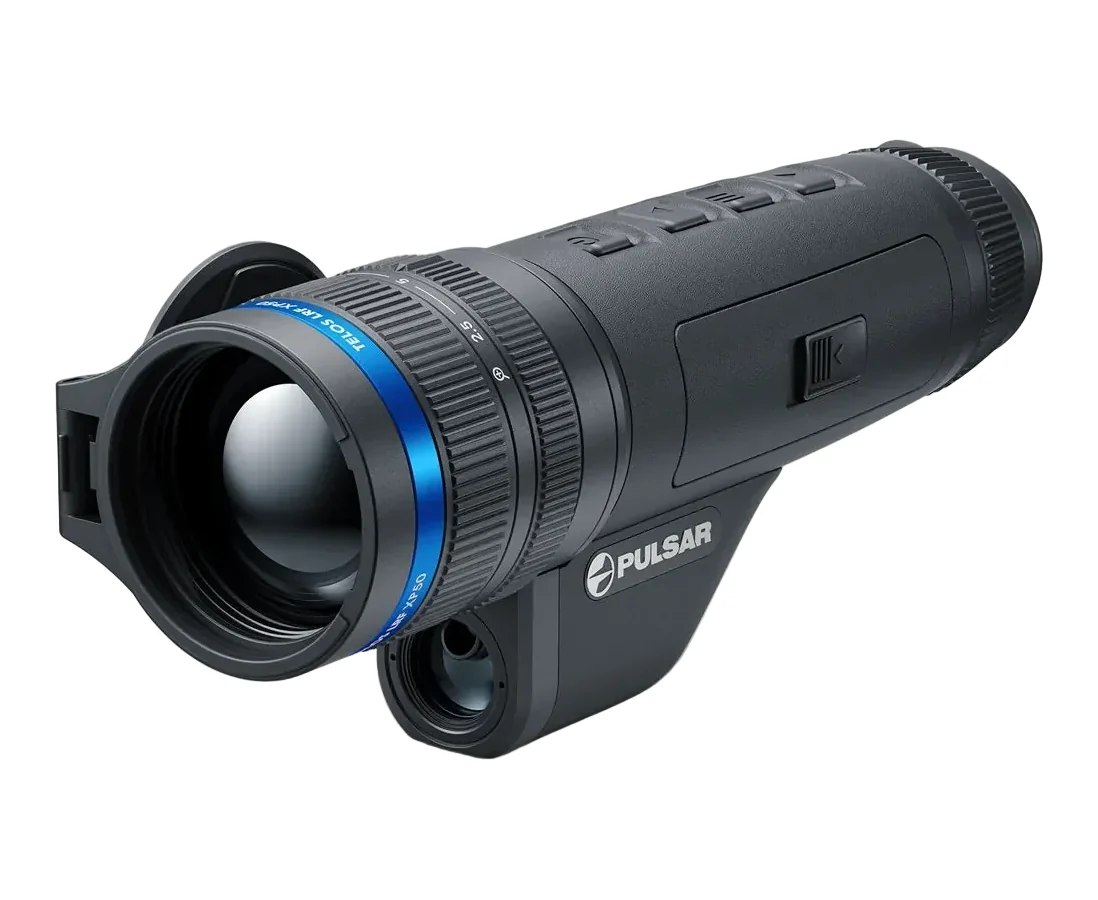
A sensor with a lower NETD (below 20 mK on the Nocpix Vista H35R, the Pulsar Telos LRF XP50 or the AGM 384 models) keeps more contrast in humid air. Our specs guide explains why.
Brush, grass and timber
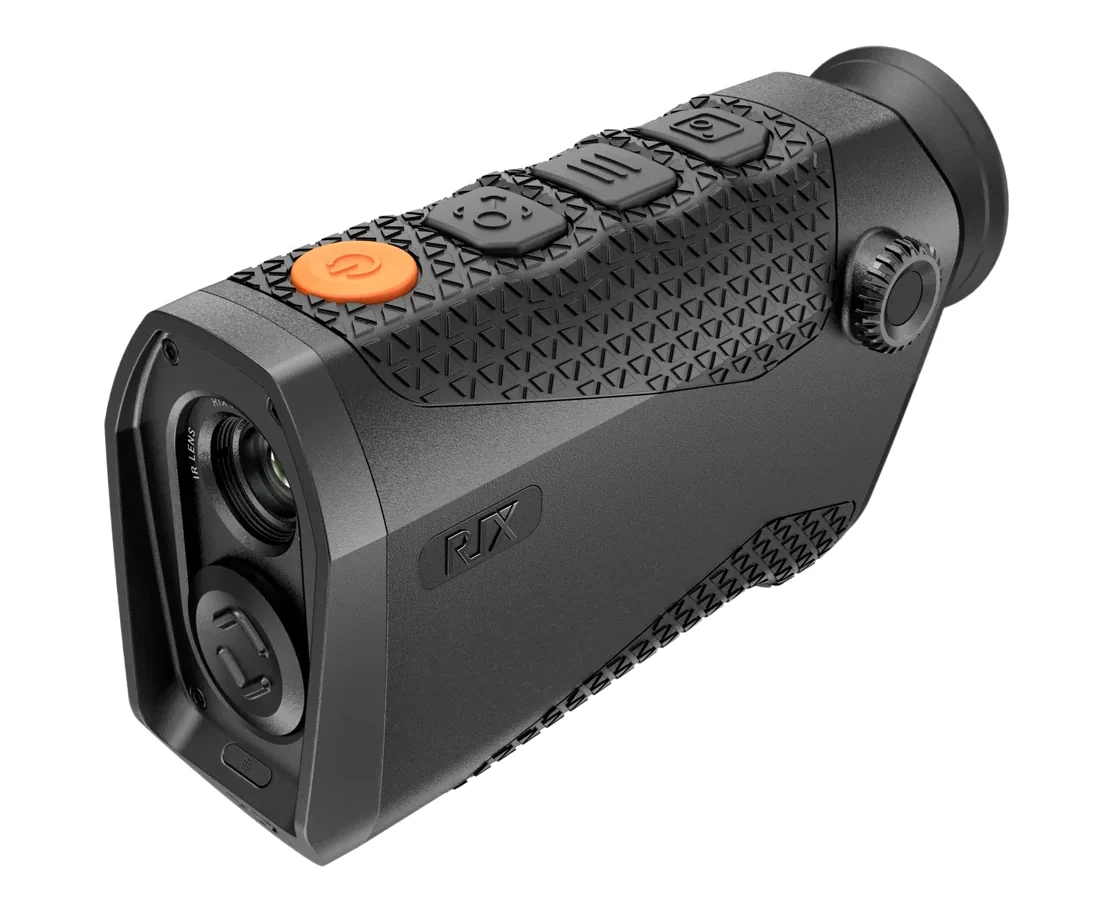
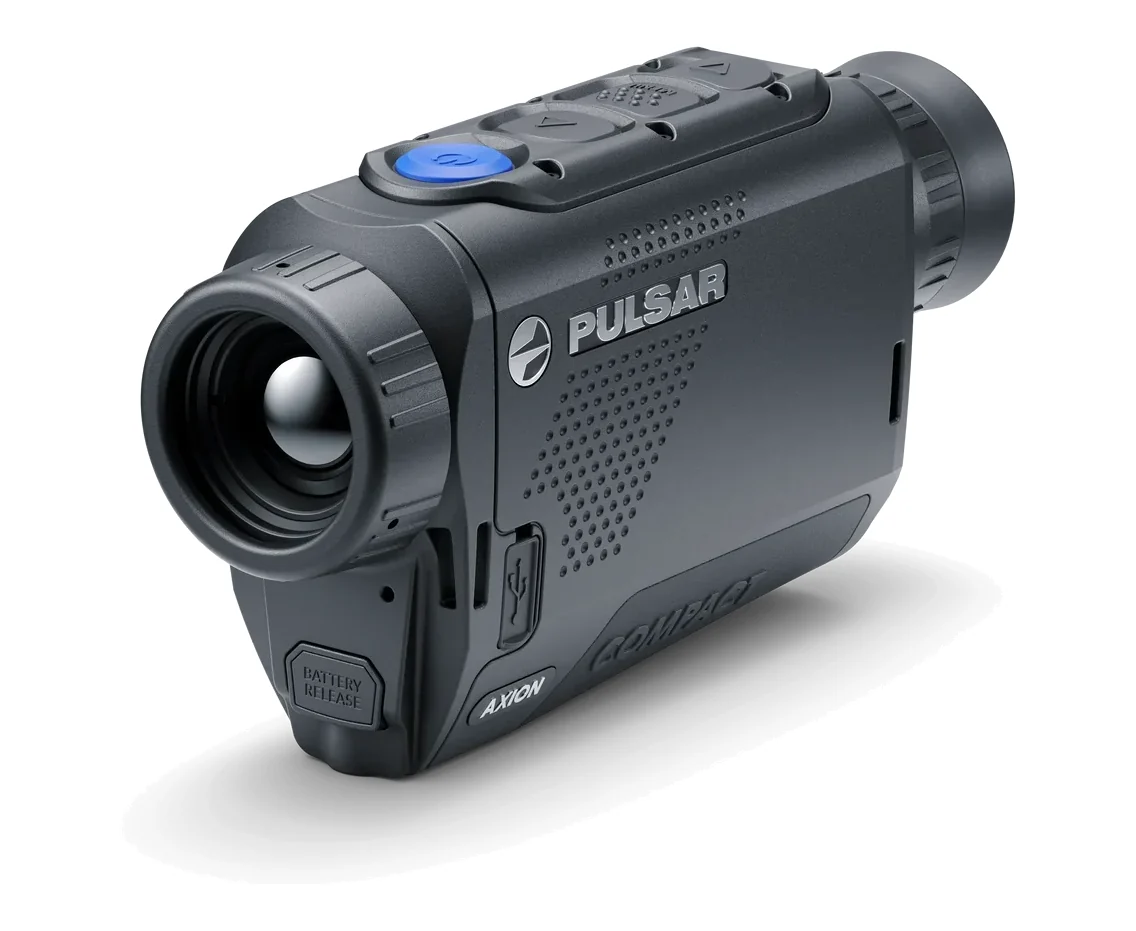
This is where thermal earns its money, and where its limits matter. Thin grass, cattails, bare winter branches and loose brush leave gaps, and an animal's heat shines through them as broken bright patches. A wide field of view helps here: the Pulsar Axion XQ19 (19.5°) and the RIX Pocket K3 (about 17.5°) show a whole thicket at once.
Dense green leaves, cedar, a fallen log or a tree trunk block the view completely. If a deer steps behind a cedar, it is gone until it steps out. Recovering game after a shot is the classic case: thermal finds a warm deer in tall grass far faster than a flashlight, but a deer that crawled under a brush pile may still need a careful walk.
Water and animals in it
Water absorbs long-wave infrared strongly, so a thermal sees only the surface. Ducks, beavers or a swimming deer show where their body is above water; fish do not show at all. The water surface also reflects the sky and the banks, which can create confusing bright or dark areas on a pond.
Figures from official manufacturer pages and US prices checked on November 9, 2026. Images: manufacturers. How we score: see our methodology.
Our selection
Three rated monoculars mentioned in this guide, at checked prices.
Frequently asked questions
Can thermal see through walls?
No. A thermal imager sees the surface temperature of the wall, such as a warm pipe or a cold window frame. It cannot show people or animals behind it.
Can thermal see through glass?
No. Ordinary window glass and windshields block long-wave infrared and reflect it, so you mostly see the glass and your own reflection. Open the window to scan.
Can thermal see through fog?
Partly. In light fog or haze, thermal usually shows more than the eye. In dense fog or heavy rain, water droplets absorb the infrared signal and range drops sharply.
Can thermal see through trees and bushes?
Through gaps in thin brush and grass, yes, as broken warm shapes. Through thick foliage or a trunk, no.
Can thermal see through clothes?
No. It shows the outer surface of clothing; tight clothing that touches the skin warms up and shows as brighter patches, but there is no image of what is underneath.