NETD, pixel pitch, lens and frame rate: thermal specs explained
NETD, pixel pitch, lens, F-number and frame rate in plain English, with the values worth paying for.
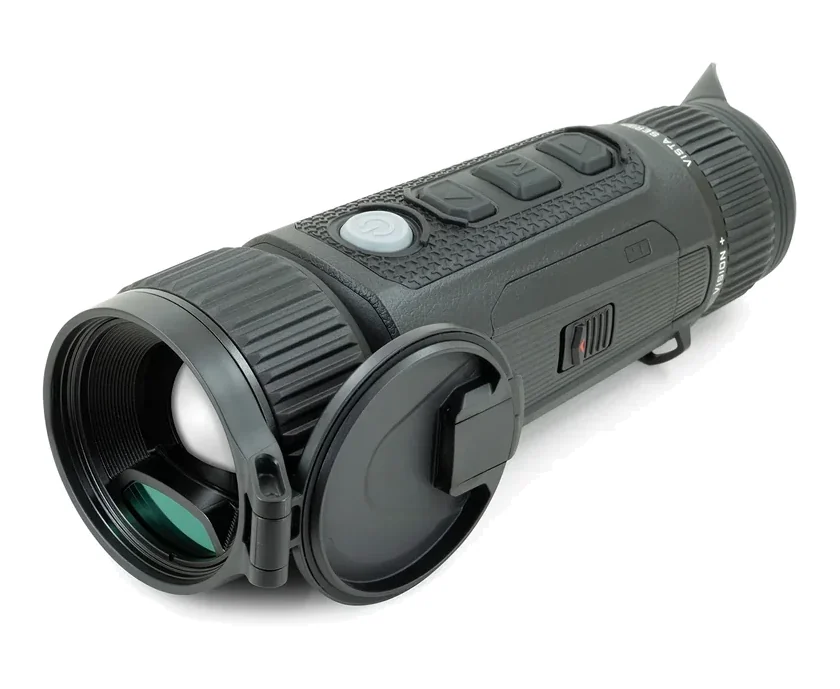
Nocpix Vista H35R9.0/10Read the review
Short answer: for most buyers, look for a 384×288 sensor, 12 µm pixels, a 19 to 25 mm lens and NETD under 25 mK. Those four numbers decide the detail, how far you see and how well the picture holds on damp nights; then check the battery hours, which tell you whether you swap at midnight. Everything else on the spec sheet is second order.
The spec sheet, line by line
| Spec | Unit | What it changes | Good value |
|---|---|---|---|
| Sensor resolution | pixels | Detail, field width, digital zoom | 384×288 or more |
| Pixel pitch | µm | Reach (with the lens) and field | 12 µm |
| NETD | mK | Contrast on damp, low-contrast nights | Under 25 mK |
| Focal length | mm | Reach (longer) vs field of view (shorter) | 19 to 35 mm for most hunting |
| F-number | - | Energy reaching the sensor | F1.0 or lower |
| Frame rate | Hz | Smoothness when panning | 50 Hz or more |
| Display | pixels | Viewing comfort, not thermal detail | 1024×768 or more |
| Battery life | hours | Whether you swap at midnight | 7 h or more, or a swappable cell |
| Water protection | IP code | Rain, snow, a dunk in a creek | IP67 or IPX7 |
NETD: the number for damp nights
NETD measures noise. A sensor rated at 20 mK can separate two surfaces that differ by 0.02 °C from its own background noise; at 50 mK it needs a difference 2.5 times larger. On a cold, dry night, almost every sensor looks good because animals are much warmer than the ground. On a warm, humid evening, or in rain, the differences shrink, and that is when a low NETD keeps the outline of a hog crisp instead of mushy.
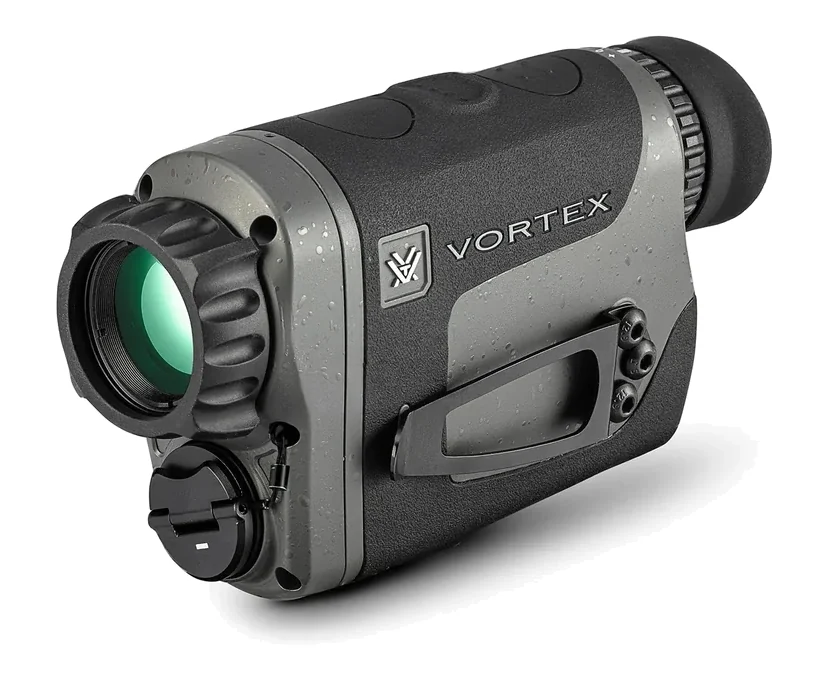
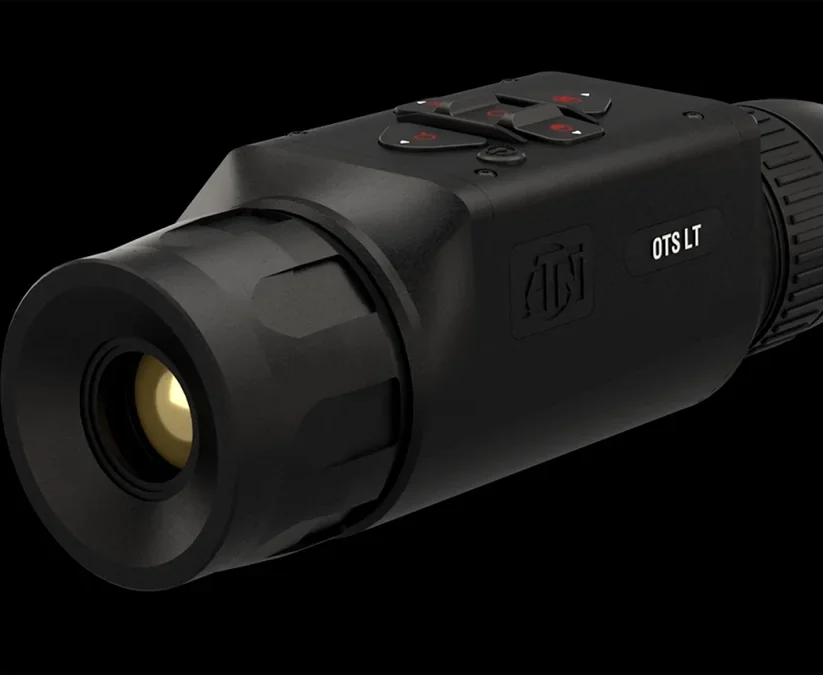
Two caveats. First, brands measure NETD differently: some quote the sensor alone, some the whole system with the lens, at different temperatures. Pulsar lists both for some models. Our methodology keeps the higher, less flattering figure. Second, Vortex and ATN publish no NETD for the Veil 400 and OTS LT 320, so we leave that criterion out of their scores instead of guessing.
| NETD stated | Models in our list |
|---|---|
| ≤15 mK | Nocpix Vista H35R |
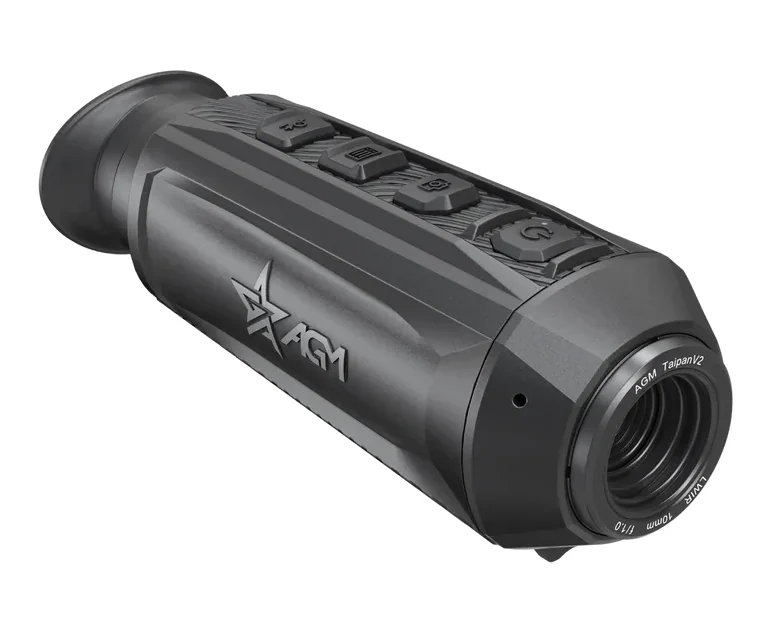
| <18 to <20 mK | Pulsar Telos LRF XP50, AGM Taipan V2 19-384, AGM ReachIR LRF 25-384 |
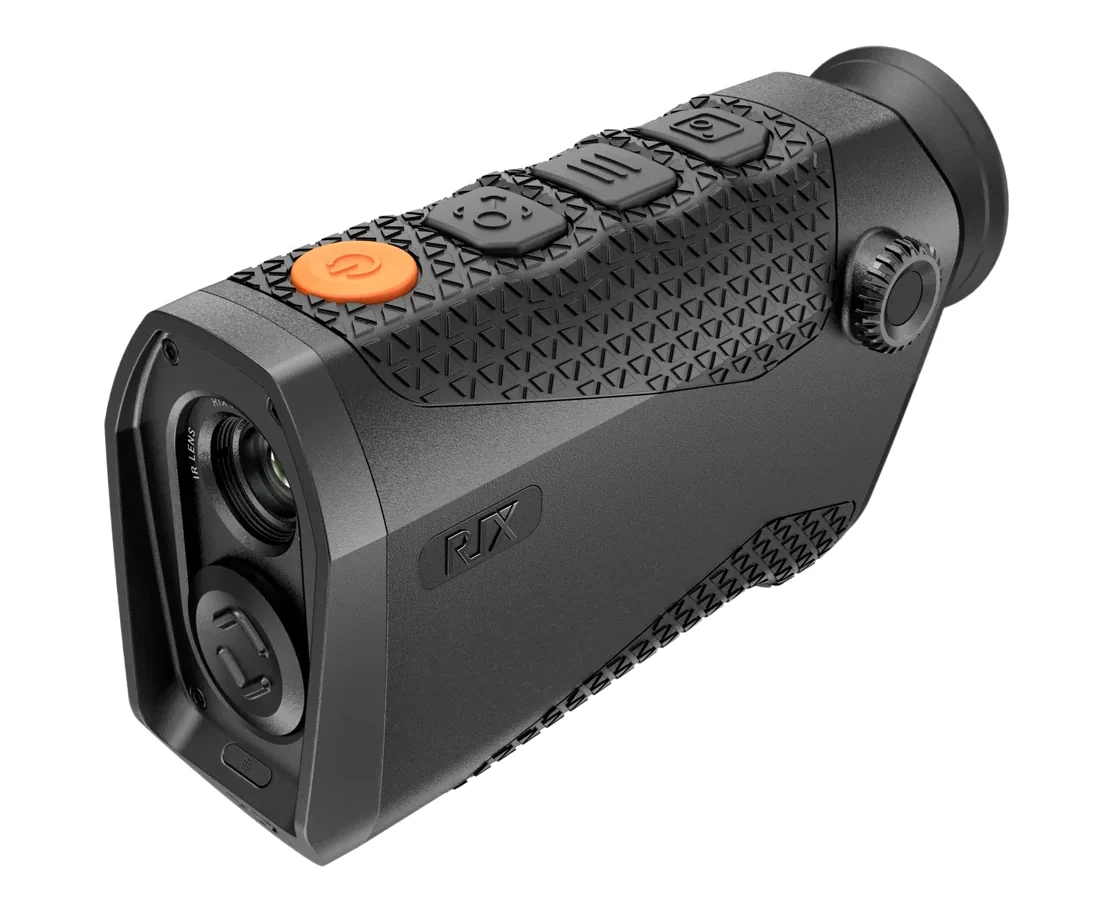
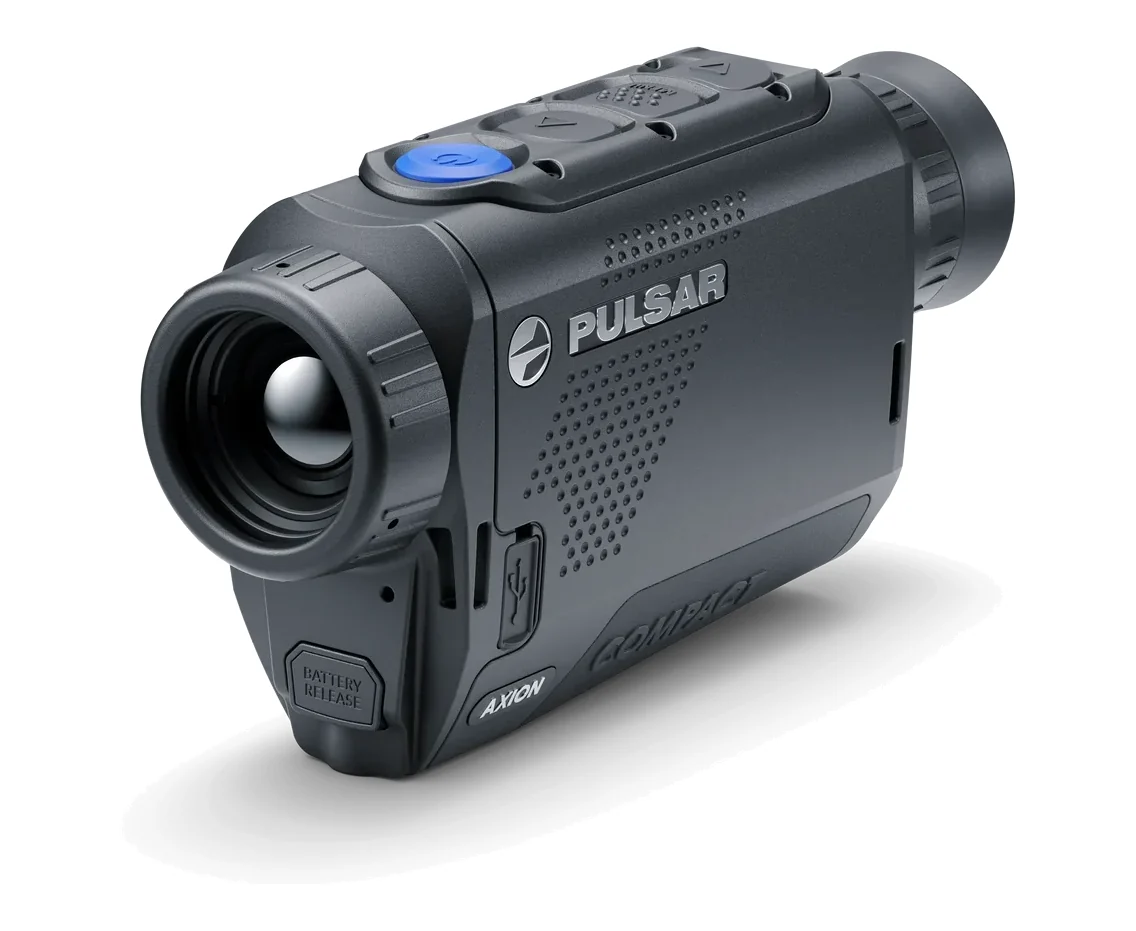
| <25 mK | RIX Pocket K3, Pulsar Axion XQ19 (sNETD) |
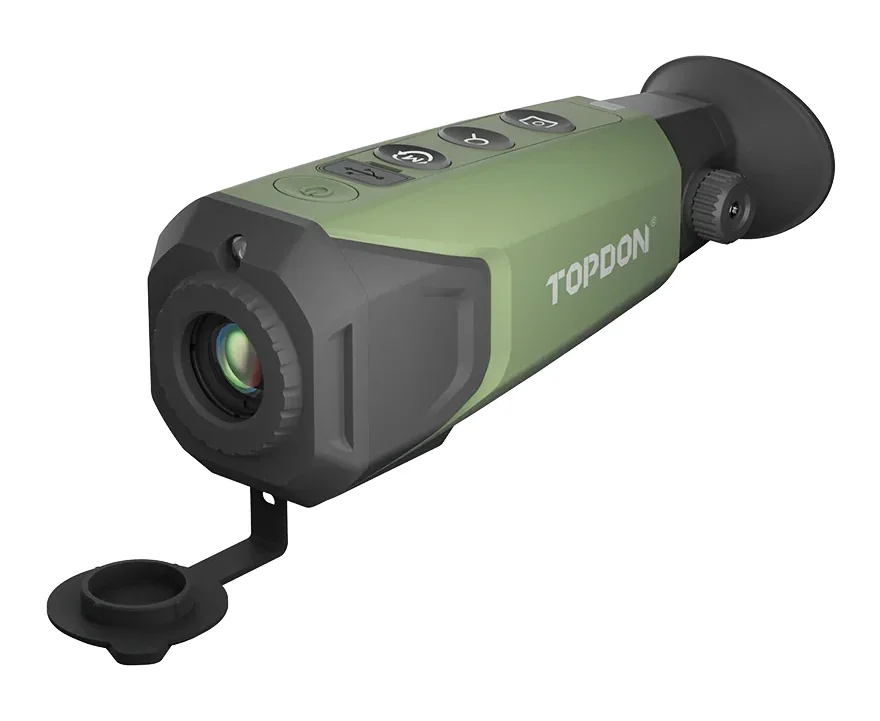
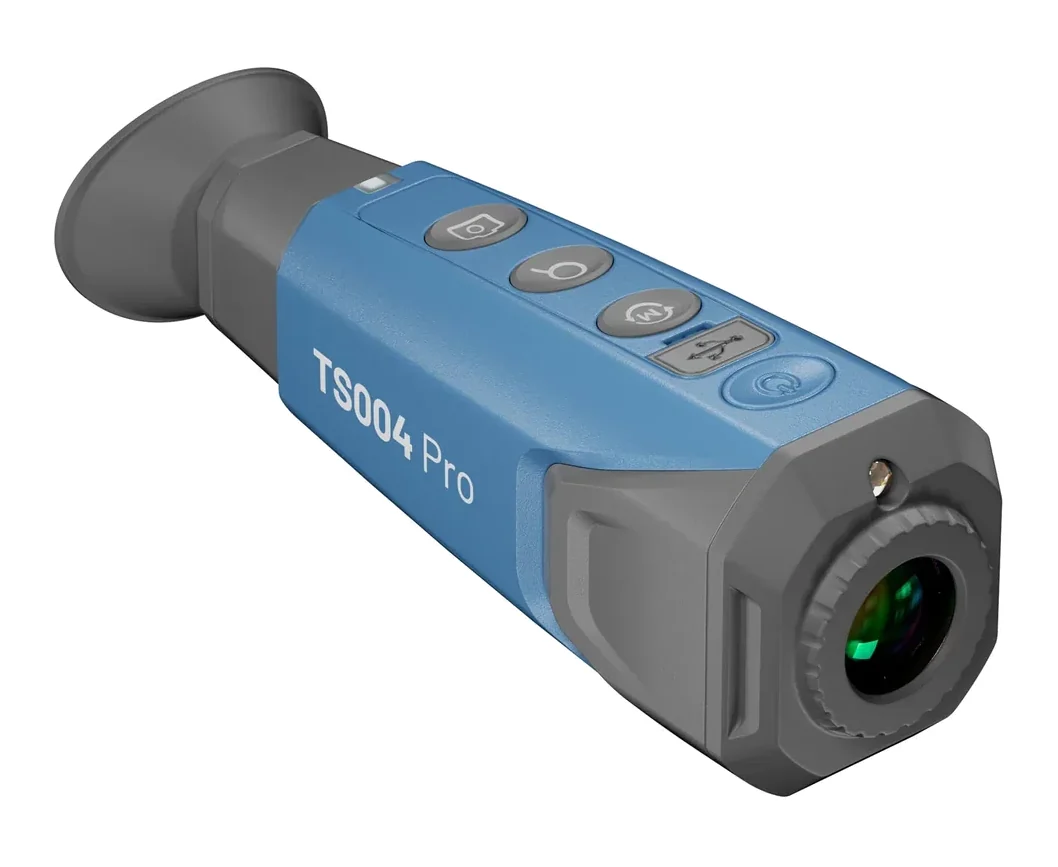
| <35 to <40 mK | AGM Taipan V2 10-256, TOPDON TS004, TS004 Pro, Pulsar Axion 2 XG35 and LRF (sensor) |
| ≤50 mK | Burris BTH35 v3 |
| Not stated | Vortex Veil 400, ATN OTS LT 320 |
Pixel pitch and focal length: the reach pair
Pixel pitch is the distance between the centers of two sensor pixels. Smaller pixels mean each one covers a smaller slice of the scene, so a given lens resolves an animal farther away. That is why a 35 mm lens on 12 µm pixels (Pulsar Axion 2 XG35) reaches about as far as a 50 mm lens on 17 µm pixels (Pulsar Telos): 35 ÷ 0.012 = 2,917 and 50 ÷ 0.017 = 2,941 pixels per radian.
That ratio is the single best way to compare reach across brands, and it is what our range calculator and our "computed reach" use. Brand range figures use different targets and odds, so they are listed on each review but not scored.
The flip side of a long focal length is a narrow field. The Burris BTH35 v3 sees far through a 7.8° window; the Pulsar Axion XQ19 shows 19.5° across but reaches about 40% less far than the same lens on 12 µm pixels. Woods want the second, open fields the first.
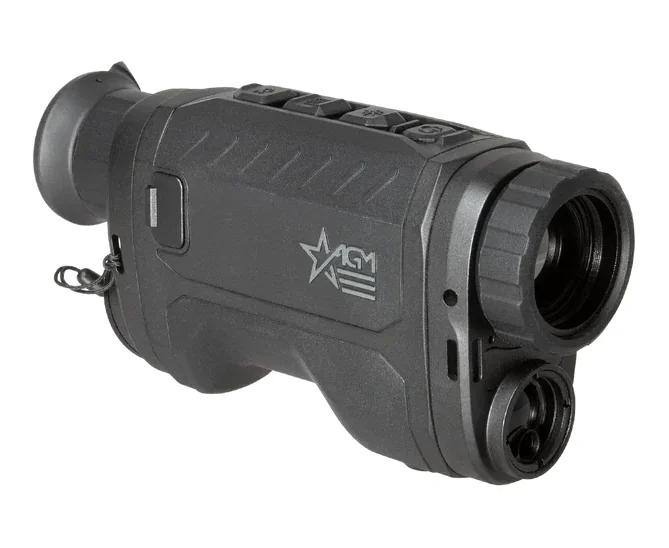
AGM ReachIR LRF 25-3848.8/10Read the review
F-number, germanium and the lens itself
Thermal lenses are made of germanium or similar materials because ordinary glass blocks long-wave infrared. The F-number is focal length divided by lens diameter: F1.0 means the lens is as wide as it is long, which gathers plenty of energy. The Nocpix Vista H35R uses F0.9, slightly faster. Lower F-numbers help sensitivity in practice, which is why brands pair their best sensors with fast lenses.
Some brands leave the focal length off the spec sheet. ATN does on the OTS LT 320; we compute about 25 mm from its 8.8° field and 320-pixel, 12 µm sensor, and label it "computed" everywhere.
Frame rate, display and the rest
- Frame rate: 50 Hz (Pulsar, AGM, RIX, TOPDON, Vortex, Burris) or 60 Hz (Nocpix, ATN). Both pan smoothly.
- Display: more screen pixels make the picture comfortable, not more detailed. A 1280×960 screen on a 256 sensor is still a 256 image.
- Battery: brand hours are measured warm, often with Wi-Fi off (AGM says so). Swappable 18650 cells or packs (AGM, RIX, Pulsar, Nocpix, Vortex, Burris) beat built-in batteries (TOPDON, ATN) on long, cold nights.
- Water protection: IP67 and IPX7 both cover immersion. "Waterproof" without a code (Vortex, Burris) or "weather resistant" (ATN) tells you less.
- Warranty: from 1 year (TOPDON) to lifetime (Vortex VIP). We score it at 5% of the overall weight.
Figures from official manufacturer pages and US prices checked on November 9, 2026. Images: manufacturers. How we score: see our methodology.
Our selection
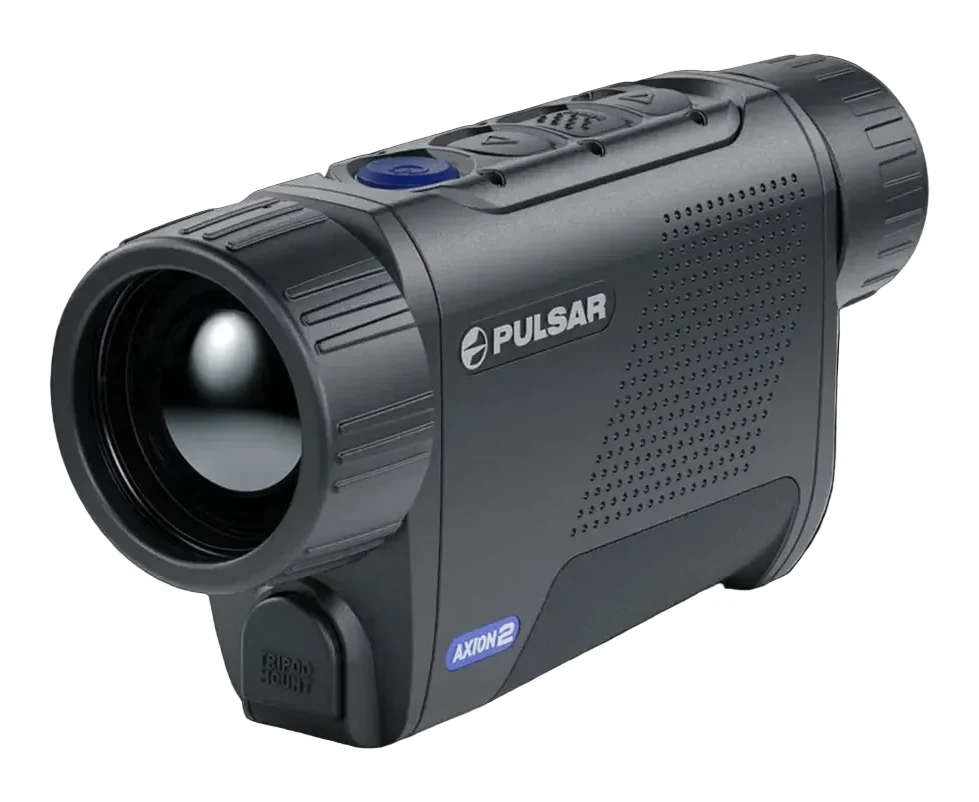
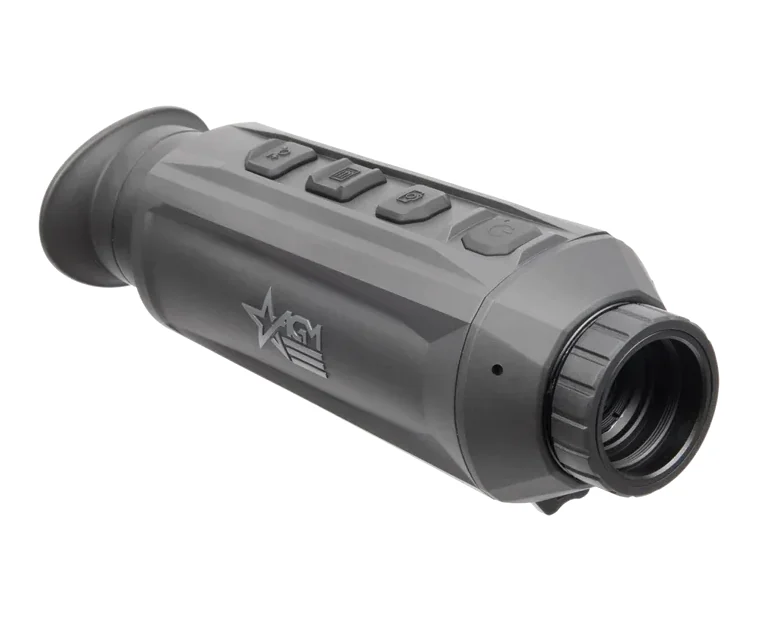
Three rated monoculars mentioned in this guide, at checked prices.
Frequently asked questions
What is a good NETD for a thermal monocular?
Under 25 mK is good, under 20 mK is very good. In our list, the Nocpix Vista H35R is rated ≤15 mK, the AGM 384 models and the Pulsar Telos below 20 mK. Around 40 to 50 mK, pictures flatten sooner on humid nights.
Is 12 µm better than 17 µm?
For reach with a given lens, yes: smaller pixels resolve targets farther away. Larger pixels give a wider field with the same lens. Most new sensors are 12 µm.
Does frame rate matter on a thermal monocular?
Between 50 and 60 Hz, not much: both are smooth, and every model we compare runs at one of the two. Much lower frame rates make panning choppy.
What does sNETD mean?
Brands use "sensor NETD" and "system NETD" to separate the sensor alone from the whole device. Pulsar lists both for some models; we score the higher of the two.